Now that the weather is getting nice are you looking for new teacher tees? Take a look at these cute science teacher apparel. Looking for something else? Take a look here. Science teacher apparel and more.
Looking for something specific? Send a message and I'm sure it can get made. You can also join the email list to stay up to date with new items.
I have been struggling to rework my lessons to meet the NGSS framework. It's so easy to just stand up in front of the students and lecture, but I know that is not the best way for students to learn. I am one who need example lessons so I can model my redesigns around them. That is why I like exemplars like this. I can see how it should be done so I know what to do when I am making my own updates.
This lesson is actually part of a 29 lesson unit so there are lots of examples to look at. Looking at them, they are very detailed (I mean down to the minute). If you are like me you don't have to make this level of detailed lesson plans. Despite this, it is something that I want to work on, little by little, and I like have examples like this to look at. Also, I can test these lessons out with my students and find out what works and what doesn't so I can make changes.
I would love to hear what you are doing to transition your lessons to NGSS (or your state's version of it).
I like showing video clips in class because I think it's a good way to grab my students' attention and spark curiosity. When I can, I like finding clips from old TV shows and movies (not necessarily old to me, but old to our students, lol).
I usually just save videos I like to a YouTube playlist or bookmark them so I can find them later. What I have been doing lately is to include them in PowerPoint presentations so that I don't forget to show them. The problem is that I usually don't want to show the whole clip. Sometimes I will include a note to myself in the presenter notes of where to start and stop. There are lots of sites out there where you can clip videos to specific times if that works better for you.
Here are some that I use in my Chemistry class to help you get started because we all know a search of videos about chemistry is going to give you so many results (many that aren't good for the classroom). Share with us some chemistry videos you've used.
I may be a little late on my 2022 blog recap, but better late than never, right? These were the top three posts of 2022. Did you miss them? Did you read them? Leave me a comment and let me know your thoughts.
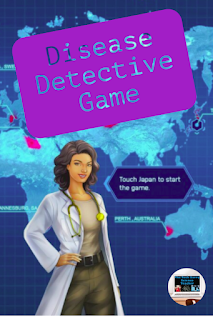
Mobile Game to Investigate Global Disease Outbreaks - a game designed to get kids interacting and having fun while developing problem-solving skills, logic skills, increasing their scientific vocabulary, and learning more about pandemics. In this character-driven simulation of Epidemic Intelligence Service (EIS) detective work, students search for the index case, racing against time to find clues to a cure.
One of the things that we as teachers need to do is to create a safe environment for our students. This can mean a lot of different things, but for science teachers, one of those is chemical safety. One resource that I like is this one from the American Chemical Society. It includes information on handling chemicals, teaching safety in the classroom and a safety checklist.
It's also important to note that this is not just for the Chemistry classroom. By developing good chemical safety habits early, students are better prepared when they move on to more advanced classes.
Have you used HyperDocs in your classroom? They can be really great, but sometimes hard to create if you are new at it. Here is a collection of HyperDocs and a template to get you started. All subjects are included, but you will certainly find science HyperDocs in the folder.
What are HyperDocs? If you aren't sure what a HyperDoc is, it's a digital lesson plan that organizes the content for a lesson in one place. It is a way to give students a chance to explore content before direct instruction. It allows students to use the 4 Cs: critical thinking, communication, collaboration, and creativity. They are traditionally made as a Google Doc, but I don't see why you can't do the same thing with a Word document.
Let me know if you give it a try and what you think.
Well, it looks like break is over and we are back at school. It’s also a new calendar year, but if you are like me the year really starts when school starts. I’m not big on resolutions, but I do want to focus on sharing science resources with you more.
Hopefully, you’ll be hearing from me more so I wanted to take a moment to reintroduce myself. I’m a science and technology teacher. I have taught both middle school (7th and 8th grades) and high school (Biology, Chemistry, Engineering, and Technology). I also had a brief stint as an adjunct professor teaching Anatomy and Physiology.
I have an email list where I send a monthly recap of blog posts. I also like to reward my subscribers with free products from my TPT store. Each time I post a new product I will email you if it applies to your grade/subject. If you want to sign up for my list you can click here.
I hope that I can provide some resources that will help make your teaching a little bit easier (because we all know how hard it is).
There are many struggles with teaching science to secondary students. Unfortunately, one of these struggles is the reading abilities of our students. Many students struggle comprehending what they are reading and doing tasks like picking out the main idea. Scientific American has done some research in this area and has made some suggestions about what techniques and help students read better to improve their comprehension of science. This article is worth the read even if you think your students aren't struggling with reading.
The National Human Genome Research Institute (NHGRI) and the Smithsonian National Museum of Natural History put together an exhibit called "Genome: Unlocking Life's Code." While we can't all take field trips to go see it, you can use the resources to bring it into your classroom. The resource library has lesson plans, videos, timelines, and other things you can use in your classroom. My favorite resource is the animated genome video. It explains the triplet code and its role in DNA replication, talks about how diet and exercise impact, your DNA, and even the forensic and geneological uses of DNA. replication
Of its STEM Role Models posters collection, Nevertheless podcast explained, “The women featured serve as amazing role models in their fields of science, technology, engineering, and mathematics (or STEM as it’s often referred to). You can listen to our episode on STEM Role Models here.
of women who are transforming teaching and learning through technology, “commissioned another four female illustrators from South America, Africa, the Middle East and China” to create a new set of STEM Role Models posters for its growing collection. Nevertheless now offers a total of eight inspiring posters, each celebrating a different woman innovator everyone should know, and they’re all available to download now
Dr. Spencer Striker, an Associate Professor of Digital Media Design at Northwestern University in Qatar, has released a new mobile game. Dr. Sara: Disease Detective is a fully interactive digital learning mobile game about epidemiology.
The game is designed to get kids interacting and having fun while developing problem-solving skills, logic skills, increasing their scientific vocabulary, and learning more about pandemics. In this character-driven simulation of Epidemic Intelligence Service (EIS) detective work, students search for the index case, racing against time to find clues to a cure.
"Dr. Sara: Disease Detective features high stakes time pressure, compelling characters, narrative design, challenging puzzles, and the natural gameplay dynamics that emerge from network science and contact tracing," Dr. Striker said. "We hope this new visual novel mobile game will inspire students to develop an interest in science, medical technology, and public health."
This fun and immersive game features interactive dialogue, innovative character design, minigames about social distancing, hidden object investigation, eureka style logic puzzles, collectible scientific vocabulary, game-based learning techniques, cinematics, visual effects, original music, and immersive sound design.
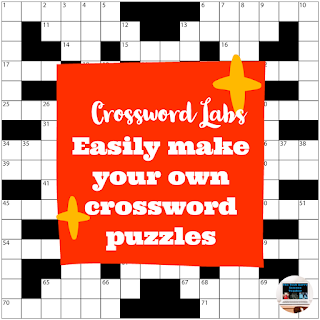
Crosswords can be a fun way for students to review or a great activity for the students who finish early. The problem is that it is hard to find a crossword puzzle that goes along with the content you are teaching. Crossword Lab is a free site that allows you to easily make your own crossword puzzles. All you need to do is to enter the word that should appear in the puzzle and then the clue for it. For example: dog man's best friend. In this example dog would be the word that would be in the puzzle and man's best friend would be the clue written.
eSkeletons is a great site for viewing skeletal models. There are a number of mammalian skeletons that you can choose from and can even look at a specific bone. While there are many sites that will allow you to view models of the skeleton, what I like about this site is that you can easily compare comparable bones of different organisms.
It is a good website to add to your anatomy toolkit.
Elements.wlonk.com is the home to The Periodic Table of Elements, in Pictures and Words. It is an interactive site where students can click on elements to see how it used and in what commons prodcuts it is found. For example, if you click on calcium an image of seashell appears along with a list of other places it is found.
In addition to the interactive page, you can also print out a copies or purchase a high quality poster.
This is something that I would use in both my middle and high school classrooms. Students often think they know what things are made of, but it would be eye opening for them to see what elements are really in the items they use every day. Connections like these provide a better understanding and enhance learning.
WonderWorks is hosting an “Ask An Astronaut” online event, where retired NASA astronaut Dr. Don Thomas will answer questions that have been submitted by the public. Teachers and students are encouraged to submit their questions now, and Dr. Thomas will answer as many as he can in a video interview that will be shared on social media on October 2, 2021 at 10 a.m. EST.
All these questions and many more will be answered when Dr. Thomas hosts the Q&A session that will be posted on WonderWorks’ social media. Teachers are encouraged to have students submit questions and watch the event. To submit a question for Dr. Don Thomas, visit the site: https://www.wonderworksonline.com/survey/.
I have found that fewer and fewer schools are offering dissections as part of their Biology/Life Science curriculum. There are many reasons that this might be, but I still feel that students are missing out by not being able to do them. The next best thing is doing dissection in person, which is to do a virtual dissection. There are many options out there and depending on why type of tech you have in your classroom, there are various choices you have.
If you use iPads in your classroom, I recommend the Frog Dissection app. It is not a free app, but I think that it's worth it. It's $3.99 which is a bit steep for an app, especially if you have to purchase 10-15 licenses. The good thing is that you only have to make the purchase once. Luckily Apple offers a volume purchase discount. Ask your IT department if your school is signed up.
Finding a middle school science review game that your kids enjoy, but is also content based can sometimes be a challenge. This is a Jeopardy style game is set up as a PowerPoint. It corresponds with the unit on Living Things and Cells from the Prentice Hall Science Explorer Series.
Do you find it difficult to find ways to review with your students that is fun, but also actually reviews the material? I have have always found game show like review games to be fun for students and also effective in reviewing. There are so many times when I hear my students say something like "I totally forgot about that!" While it makes me sad to hear it, I am also happy that I am doing this review so that students get an idea of what areas that they still need to focus on.
I hope that you will check out this freebie. You might also be interested in a Cell Project (another one of my freebies).
Happy Sciencing!
Cristina from Savvy Secondary Science
Playground Physics is a middle-school science program that blends physical play with virtual activities to support inquiry-based learning aligned to Next Generation Science Standards. Students discover and explore the physics in their everyday lives through their physical play.
There are three components of Playground Physics: an app, a teacher activity guide, and professional development.
Using the app, they record a video of themselves playing, and then tap points along the way to trace a path of motion, and discover the motion, forces, and energy involved!
Students then analyze the data in their play performances via app-generated graphs and lenses focused on energy, force, and motion. Click on the video below to see it work.
A school bus full of third graders sits stranded, submerged in a dense, sticky substance with no way to escape. Then someone comes up with an idea. They add baking soda to a vial of vinegar and top it with a balloon. The mixing of the two substances causes an immediate chemical reaction that produces carbon dioxide, inflating the balloon and lifting them to safety. Ms. Frizzle’s students have once again used science to get them out of a jam -- this time in the form of a cake.
Twenty years ago, four-year-old Alex Peterson was on the edge of her seat watching Ms. Frizzle and her class escape from being baked inside a cake on the "Ready, Set, Dough" episode of "The Magic School Bus."
"I loved baking when I was a kid. Watching those air bubbles form, it just clicked for me that chemistry is what makes cakes, and I realized that this is what I wanted to do," says Peterson, now a doctoral student in biochemistry at the University of Maryland. "I have a very vivid memory from the third grade of looking at the schedule and counting down the time to science class because I just couldn't wait to do science in 'real-life.'"
Peterson in her lab (left) and dressed up as Ms. Frizzle with her cat dressed up as Liz for Halloween (right)
In her university lab, Peterson studies the enzymes that form biofilm, a slimy buildup of microorganisms that can grow on all types of surfaces, from teeth and buildings to pacemakers and ponds. She's looking for a way to effectively break down the notoriously impenetrable substance, which can make it hard for medications to reach the infections they need to treat. Finding a way to reduce biofilms could make treatments more effective. When asked about the effect "The Magic School Bus" had on her current career path in science, Peterson says, "It's absolutely why I'm a chemist."
Twenty-five years ago, Scholastic's "The Magic School Bus" veered off the written page and into our television sets, bringing with it a credo that emphasized taking chances, making mistakes, and getting messy. Support from the National Science Foundation helped bring the celebrated book series to the airwaves and to young viewers like Peterson, sitting frog-legged on living room floors across the country.
Sandy Welch was the director of education at PBS when the network picked up "The Magic School Bus" as part of its portfolio of children's programming.
"We were excited because it was the first fully animated science show," Welch says. "I was excited to see a teacher featured, and not just any teacher -- [Ms. Frizzle] was a delight!"
Welch says Ms. Frizzle helped inspire teachers to use the programming in their classrooms.
Today, Welch is part of a division in NSF’s education directorate dedicated to providing funding for children's media programs that focus on STEM education. It supports the agency's multi-decade effort to boost science learning beyond the classroom, where research has shown most learning takes place.
"We know that children learn intuitively and that a lot of it happens in an informal setting," says Welch.
NSF supports a wide range of informal STEM programming in museums, through after-school programs and citizen science projects. With mass media, however, there is a potential to reach millions.
According to Welch, for NSF to fund a media program it must meet rigorous criteria. Creators must demonstrate the concept was developed based on existing knowledge of best practices in STEM education and how children learn through media. They must have clearly defined goals on how to interest, engage and impact learners. They must have a way to evaluate the program's impact.
And they must be innovative.
"Our program is explicit that we want to fund innovation," Welch says. "We are looking for proposals that experiment with new technology, a new approach, a new distribution platform. We're willing to fund things that may be risky -- like a new platform that hasn't been tried but seems to hold promise."
"The Magic School Bus," "3-2-1 Contact," "Reading Rainbow," "Zoom" and "Bill Nye the Science Guy" were just a few of the early NSF-funded shows that took an innovative approach to bringing science to life on the small screen.
"Peep and the Big Wide World," for example, was one of the first programs to show that toddlers could learn basic science concepts and skills like measuring, comparing, and estimating through television shows geared toward their age group.
Courtesy SciGirls/PBS Kids
"SciGirls" was launched in response to the fact that women in the U.S. remain underrepresented in STEM, especially in fields like engineering and the computer sciences. The show engages tween viewers in STEM by following a group of real-world girls as they predict, observe, experiment, and otherwise don their "scientist hats" to understand the world around them.
Many of today's shows have also been adapted to a multimedia and mobile world, augmenting their TV programming with innovative web content and downloadable apps. Kids who love "Cyberchase," a show designed to make math fun and accessible and that NSF began funding in the late 1990s, can now access educational games, videos, and hands-on activities via the "Cyberchase" webpage on the PBS Kids website and through apps. The webpage for "Design Squad," another NSF-funded show on PBS, offers a short video on how to make everything from a two-wheeled balloon car to bristle bots made from toothbrush heads
Through on-screen characters like Peep, Peg, and Digit, and with access to hands-on activities and other innovative science content, NSF is ensuring quality science programming reaches newer generations of Alex Petersons, inspiring them to become scientists or -- at the very least -- to take chances, make mistakes and get messy!
This video will really get your kids thinking (bonus points in you do this live for your classes). I always love to see what the explanations are that the students come up with.
This video is a fun way to introduce your students to the concept of intermolecular forces. Afterward, you can explain how this was done. I am not going to give it away here, but you can find the solution here.
If you are looking for a tie in to the NGSS it fits with Science Practice: Constructing Explanations and Designing Solutions, HS-ESS2-5 Water, and HS-PS1 Matter and Its Interactions


.jpeg)
.jpeg)




.jpeg)